
You can be excellent at your trade, turn up on time, and deliver high-quality work every day. But if your website is not converting visitors into enquiries, your business is missing out on jobs you should be winning. For many Australian tradies, the real issue is not visibility. It is what happens after someone clicks through to the website.
Most trade businesses already appear on Google, invest in SEO, or pay for ads. Yet enquiries remain inconsistent. This guide explains how to improve your conversion rate so more of your existing website visitors turn into phone calls, quote requests, and bookings, without increasing your marketing spend.
What Conversion Rate Means for Tradies
Conversion rate refers to the percentage of website visitors who take a meaningful action. In trade and service businesses, this usually means:
- Calling your business
- Filling out a quote or enquiry form
- Booking a job online
For example, if 100 people visit your website and five contact you, your conversion rate is five percent.
Across Australian trade businesses, the typical benchmarks are:
- Average conversion rate: around 2 to 3 percent
- Strong performance: 5 to 8 percent
- Excellent performance: 10 percent or more
Improving conversion rate allows you to generate more leads from the same traffic. That means better return on investment and higher profit without increasing ad spend.
Why Most Tradie Websites Struggle to Convert
Many trade websites are built with design in mind, not lead generation. As a result, they fail to guide visitors toward taking action.
Common conversion issues include:
- Too much text and too many services on one page
- No clear or visible call to action
- Lack of trust signals such as reviews or licences
- Slow load times on mobile devices
- Long or complicated enquiry forms
Most potential customers are busy and often stressed. They want quick answers and reassurance. If your website feels confusing or difficult to use, they will move on to the next option.
Increasing Conversion — Checklist
1. Focus Each Page on One Clear Service
One of the most effective ways to improve conversion is to simplify your messaging. Many tradie websites try to cover every service on every page, which overwhelms visitors.
A higher-converting approach is:
- One page focused on one main service
- Clear alignment with what the person searched for
- One primary call to action per page
For example, a page targeting “emergency electrician in Western Sydney” should focus only on emergency electrical work in that area. Clear, focused pages reduce confusion and make it easier for visitors to take the next step.
2. Make Your Phone Number Easy to Find
If phone calls are important to your business, your phone number should be immediately visible.
Best practice includes:
- Displaying your phone number in the website header
- Repeating it near key calls to action
- Ensuring click-to-call functionality on mobile devices
Use clear language such as “Call now for fast service” rather than vague prompts. Visitors are usually not researching for long periods. They want help quickly and want to know how to reach you without effort.
3. Use Clear and Reassuring Calls to Action
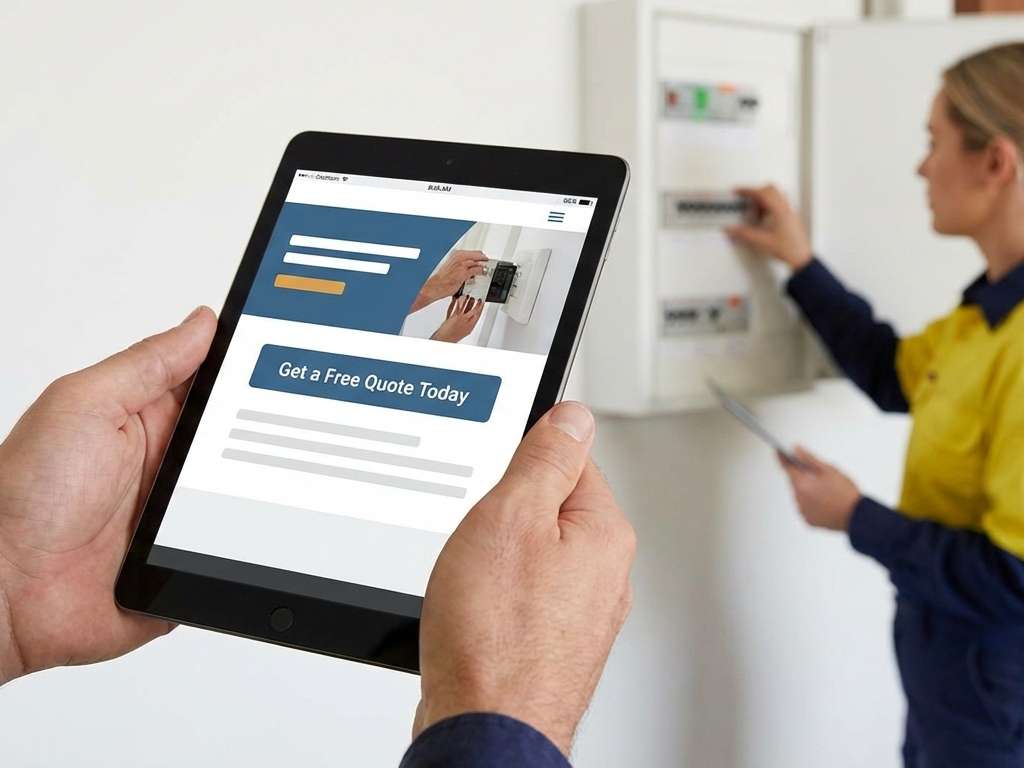
Your call-to-action needs to spell out precisely what will happen next. Generic buttons like “Submit” or “Send” do not provide reassurance.
High-performing calls to action often include phrases such as:
- Get a free quote today
- Book a job online
- Speak to a local plumber now
- Request a callback today
Calls to action should appear:
- Above the fold
- Within the main content where relevant
- At the bottom of the page
Never make visitors search for how to contact you.
4. Reduce Friction in Enquiry Forms
Long forms are one of the biggest barriers to conversion. At the first point of contact, you only need basic information.
A simple enquiry form usually requires:
- Name
- Phone number
- Short message
Additional details can be collected once contact has been made. Reducing the number of fields makes it easier for people to reach out and increases the number of completed enquiries.
5. Build Trust With Genuine Proof
People hiring a tradie want confidence that you are reliable, qualified, and local. Trust signals play a major role in conversion.
Trust-building strategies that work well include:
- Suburbs are mentioned in real Google reviews.
- Images of your team, cars, and real tasks
- Memberships, certifications, and trade licenses
- Years of experience and well-defined service areas
Real proof is far more persuasive than marketing slogans, so stay away from stock photos and generic statements like “best service guaranteed.”
Optimise Your Website for Mobile Users
The majority of trade-related searches take place on mobile phones. If your site performs badly on mobile, conversion rates will suffer.
A mobile-friendly site would include:
- Fast load times
- Large, easy-to-tap buttons
- Simple layouts with clear spacing
- Easy access to calling or enquiries
A practical test is to use your own phone. If navigating the site feels frustrating, potential customers are likely abandoning it.
Ensure Ads and Landing Pages Match
When you run paid advertisements, the landing page must say exactly what the ad said. Any disparity in messaging will raise questions and decrease trust.
High-converting landing pages-usually feature:
- Match the search keyword with ad wording
- Clearly state the service and location above the fold.
- Eliminate extra navigation and distractions.
- Focus on one main action
While the ad may be what attracts a visitor, it’s the landing page that will tell them if they should contact you.
Address Common Objections Early
Most visitors have questions before they contact a tradie. Answering these upfront can greatly improve conversions.
These usually include:
- Are they local and licensed?
- How quickly can they attend?
- What will it cost?
- Can they be trusted to show up?
Sections such as “Why choose us”, “How it works”, or “What happens next” help reduce uncertainty while engendering confidence.
6. Use Local Language and Signals
Local relevance increases trust. Mentioning suburbs you service and reinforcing your local presence helps visitors feel more comfortable contacting you.
Examples include:
- Listing key suburbs or regions you serve
- Highlighting that you are locally owned or operated
- Referencing work completed in nearby areas
People prefer dealing with businesses that feel familiar and genuinely local.
Track what drives enquiries
You cannot improve what you are not measuring. Conversion tracking is essential.
At minimum, you should be tracking:
- Phone calls
- Form Submissions
- Online Bookings
Tracking shows which pages perform well and which ones need more work. Decisions based on data are much more effective than simply guessing.
7. Optimising Conversions Is an Ongoing Process
Improving conversion rate is not about shortcuts or tricks. It involves:
- Knowing how your customers think
- Removing unnecessary friction
- Building trust with clarity and proof
- Make it Easy to Take Action
Even small improvements can significantly increase enquiries, lower cost per lead, and improve revenue over time.
Key Takeaways
Improvement in your conversion rate can help you generate more leads from the already acquired traffic. Distinct service-focused pages, visible contact information, strong calls to action, simple forms, mobile optimisation, and authentic trust signals all play a crucial role in this. Performance tracking and continuous improvement guarantee consistent results.
If your website is attracting visitors but not enough enquiries, it is probably not working as hard as it should be.
A small improvement in the rate of conversion can lead to a significant increase in the jobs booked, thereby driving long-term business growth.
If you want professional assistance in developing your website into a source of consistently qualified leads, book a strategy session here.